From Cabin to Cabin on Hardangervidda in Summer
Planning a Hike on the Hardangervidda Plateau? Here’s What You Need to Know
We recommend waiting until late June before setting out on a hike in Hardangervidda National Park. If you choose to go earlier, please be aware that trails may be wet, large snowfields may still need to be crossed, mountain cabins may be closed, and rivers can have high water levels. In addition, summer bridges are usually not in place until June or July, and they are removed again in autumn. When the staffed cabins close in September, the summer bridges are also dismantled.
Wildlife
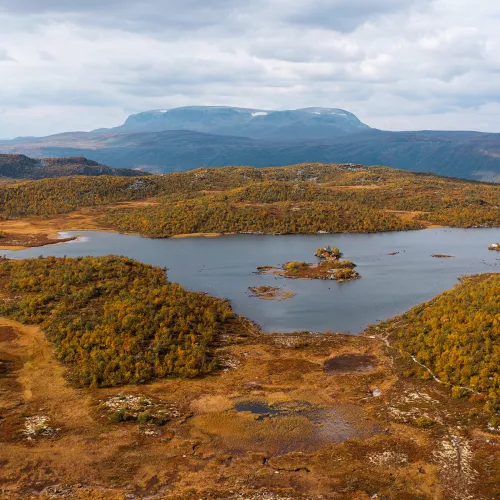
One of the most important reasons to wait until well into June is to protect wildlife. Wild reindeer (Rangifer tarandus tarandus) calve between mid-May and mid-June, and many bird species are nesting and caring for their young during this time. The wild reindeer primarily inhabit the open mountain areas of southern Norway, and the Norwegian populations are among the last viable herds in Europe. This gives Norway a special responsibility to safeguard the species and its habitat. Some DNT cabins may be temporarily closed — even to key holders — if a herd of reindeer is nearby or if calving is occurring. Always check ut.no for the latest updates before starting your trip.
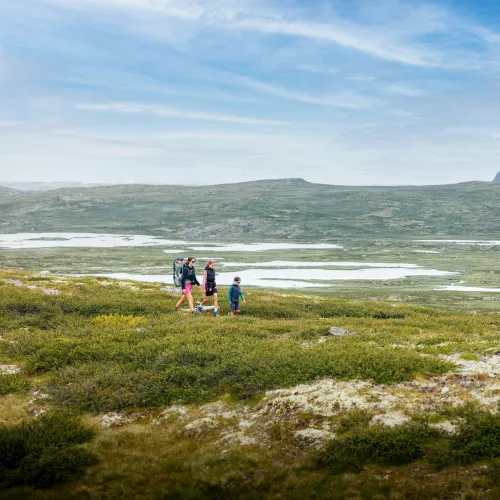
You are free to roam in Hardangervidda, but we recommend sticking to marked trails. The Norwegian Trekking Association (DNT) maintains a well-developed trail network that connects seven staffed and five self-service cabins within the national park. One of DNT’s most important contributions to protecting wild reindeer is the channeling of foot traffic: when people stay on marked trails, sensitive areas are less disturbed and wildlife can more easily thrive undisturbed.
Cabins
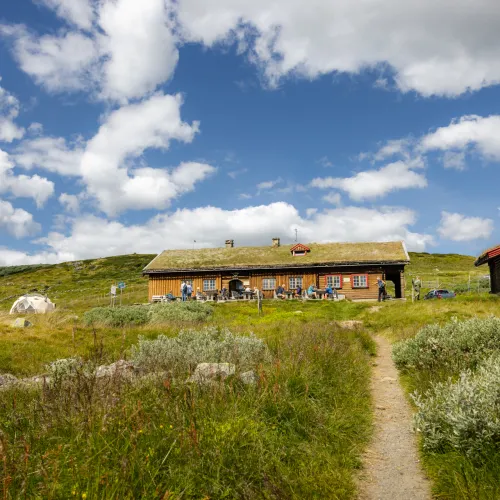
At the staffed cabins, you can enjoy a delicious homemade meal. The self-service cabins are stocked with food such as crispbread, spreads, and dinner ingredients. Everyone is welcome to use DNT cabins, but for access to self-service cabins, at least one person in the group must be a DNT member and have the special DNT cabin key (which can be borrowed from the Tourist Information Office in Geilo — check opening hours). If you're planning a hut-to-hut hike, we recommend booking overnight stays in advance and informing hosts of any food allergies.
Most of the DNT cabins on Hardangervidda open in late June and close in early September. Whether you are hiking from cabin to cabin or camping, it is important to bring a map and compass. Weather in the mountains can change quickly, and mobile phone coverage is limited or non-existent in many areas, safe your battery and use fly-mode. Make sure to carry a first aid kit and let someone know your planned route. The average hiking speed with a backpack is about 3 km/hour. Also, take time to familiarize yourself with Norwegian outdoor rights (allemannsretten), especially rules about where you can pitch your tent, make a fire, or hike off-trail. You can drink the water from rivers and lakes as long as it is a good flow.
We also recommend downloading the Hjelp 113 app – Norway’s national emergency app.
The Hjelp 113 app is a useful tool in acute situations where stress and confusion may occur. It gathers all emergency numbers in one place, making it easy to contact the correct emergency service quickly.
Fishing
If you wish to fish in one of the many lakes on the Hardangervidda and in the Hallingskarvet area, you can check which waters require a fishing permit at inatur.no. You can also purchase a permit there, or at one of the staffed DNT cabins. Please note that some privately owned lakes may be closed to fishing.
Hiking Responsibly: Small choices make a big difference!
To help keep Hardangervidda a beautiful and thriving destination for both people and wildlife, it's important that we all show care. Pack out all your waste — even biodegradable items. Stick to the trails to protect fragile vegetation, and avoid disturbing animals, especially during nesting season or when reindeer are calving. Dogs must be kept on a leash. A little extra mindfulness goes a long way in preserving this special landscape for future generations.
Tip! Starting your journey from Geilo? Take the summer lift up into the mountains for a comfortable start and a perfect base for your Hardangervidda adventure.
Getting to Hardangervidda – No Car Needed
You don’t need a car to visit Hardangervidda. From both Oslo and Bergen, you can take the train with convenient stops at Finse, Haugastøl, Ustaoset, and Geilo – all great starting points for mountain hikes. Download the Vy app to book your train tickets in advance, as some departures may sell out during the summer season.
Local bus Brakar route 334 runs to Ustaoset and Haugastøl. Be sure to check the timetable before your trip, and use the Brakar app to buy tickets.
Skyss route 991 crosses the Hardangervidda plateau to Eidfjord, operating from May 1st to September 1st, with one to two departures daily. It’s a scenic and relaxing way to experience the plateau from the road.
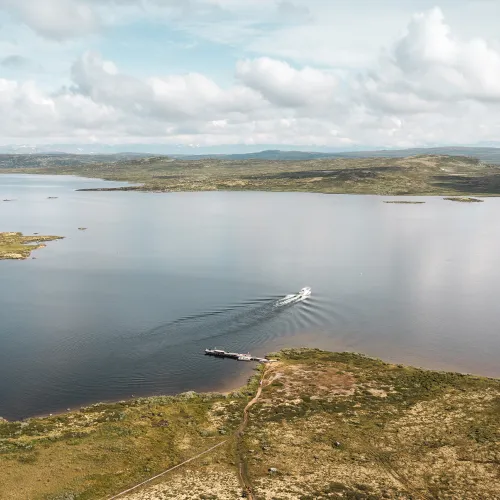
Tip! Begin or end your Hardangervidda adventure with a peaceful boat ride across Lake Halnefjorden on the Halnekongen. The journey takes about 40 minutes, and the boat holds up to 27 passengers. Tickets can be booked in advance or bought on board. Dogs are welcome too!
See trail maps and an overview of all DNT cabins.
Go to ut.no